
Ray Kuglar – Unit Stills Photography
Ray Kuglar is a Houston-based unit stills photographer whose work helps bridge the gap between production and audience. He has spent more than a decade creating images for film, television, and commercial productions.
Do You Have a Good Photography Tip for Us?
f/8 is great… or what’s more commonly known as “f/8 and be there.”

The Night History Introduced Itself
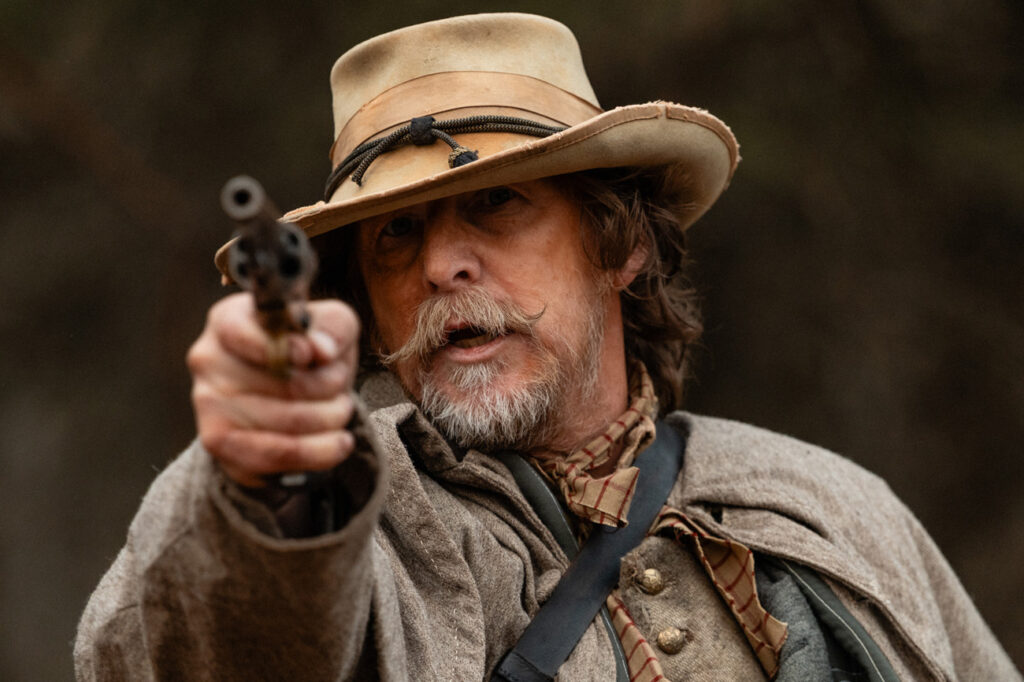
I have a photography-adjacent story from my time in Pennsylvania during the principal photography of Gettysburg 1863, which may be one of my all-time favorite stories, period. Spoiler: it has nothing to do with the talent in front of the camera.
When I was offered the project by director Bo Brinkman, I jumped at the chance.
• Feature film? Check.
• Big-name talent? Check.
• Getting to travel somewhere I’d never been and work with a crew I’d never met? Double check.
Arguably it would be the biggest project of my career, and to make it happen, I would have to pull out of another project and miss the premiere of a documentary I co-directed.
To prepare, I dove into photographs from the Civil War era, with a particular emphasis on those involving the Battle of Gettysburg. I found myself drawn to the work of Alexander Gardner and learned that Gettysburg is where photojournalism in America truly took off. The images captured there were among the first unfiltered depictions of war that Americans had ever seen. I was fascinated.
Unit stills work is, at its core, photojournalism, right? So, boom. I’m heading to the town where it all started, where the pioneers of my profession documented the bloodiest conflict in American history, and where I would photograph what felt like the most important project of my career: a historical drama.
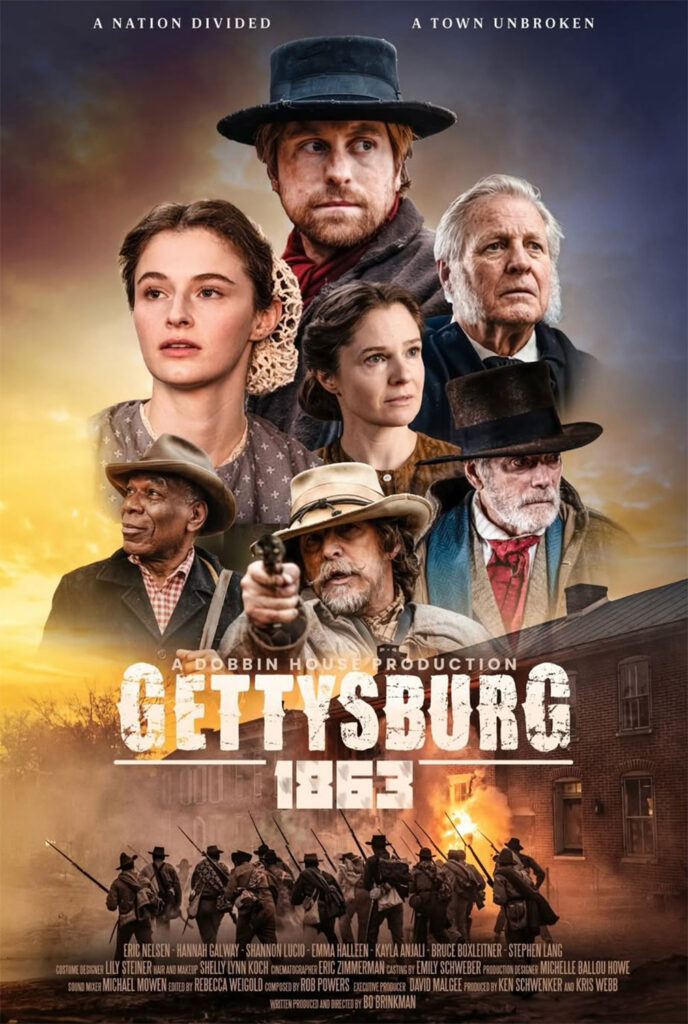
With equal parts respect and gratitude, I traveled to Gettysburg.
A few days into production, several crew members and I made our way into Reliance Mine, a hidden saloon conveniently located on our hotel property. We settled around the fire near the entrance and exchanged stories, having only met each other at the start of the show.
Mid-conversation, the door opened behind me. I turned, expecting more of our group.
Instead, an older gentleman walked in carrying a small cardboard box under his arm. I don’t know why, but I legitimately could not stop staring as he approached the fire. Without hesitation, he tossed the box into the flames and said, “I needed to get rid of that.”
Naturally, we started joking about what could have been inside.
He noticed me staring, and we struck up a conversation.
“Do I know you?”
“No,” I said.
“Do you know me?”
Again, I replied, “No.”
He asked who we were and what we were doing in town. We filled him in on the project and our respective roles. I mentioned that I was especially excited because I was the unit still photographer and that, in some small way, what I was doing felt connected to the town’s photographic history, an honor I didn’t take lightly.
We started going back and forth about the details.
My middle name is Alexander, so I brought up the work of Alexander Gardner and Timothy H. O’Sullivan.
He reminded me about Mathew Brady.
I objected wholeheartedly.
“Mathew Brady wasn’t a photographer. He was basically a producer who brought photographers here. They created the work. He took the credit.”
He laughed and corrected me.
Brady had been a photographer earlier in his career, but by the time the Civil War began, his eyesight had deteriorated. That’s why he brought in Gardner and O’Sullivan and stepped into more of a producer’s role.
Then he asked where I had learned all of this.
“The internet,” I said.
He told us to hold on and disappeared. We waited.
A few minutes later, he returned with something tucked behind his back, and the conversation resumed. He let us in on a not-so-secret, but secret to us, secret. His books.
It turned out the man with the box was William Frassanito, the pioneering force behind much of what society knows about the photographs taken during the Battle of Gettysburg. Everything I had been enthusiastically explaining, he had literally written the book on.
He opened one of his books and asked for a flashlight. I pulled out my phone, remembered I could use the flashlight while recording video, and started filming as he spoke about his discoveries, his work, and our shared photographic history.
Before arriving in Gettysburg, I’d spent my free time looking into the photographers who documented the battle and helped shape the profession I now call my own. I came hoping to feel some connection to that history, to better understand the people who stood where I was about to stand and made images that still matter more than 160 years later.
Then, on a random night in a hidden saloon, I found myself conversing with the man who dedicated his life to preserving their story.
I’m not someone who gets starstruck. I don’t usually ask for personal photos. But after an evening like that, there was only one thing left to do.
Ask for a photograph together.
What’s in Your Bag?
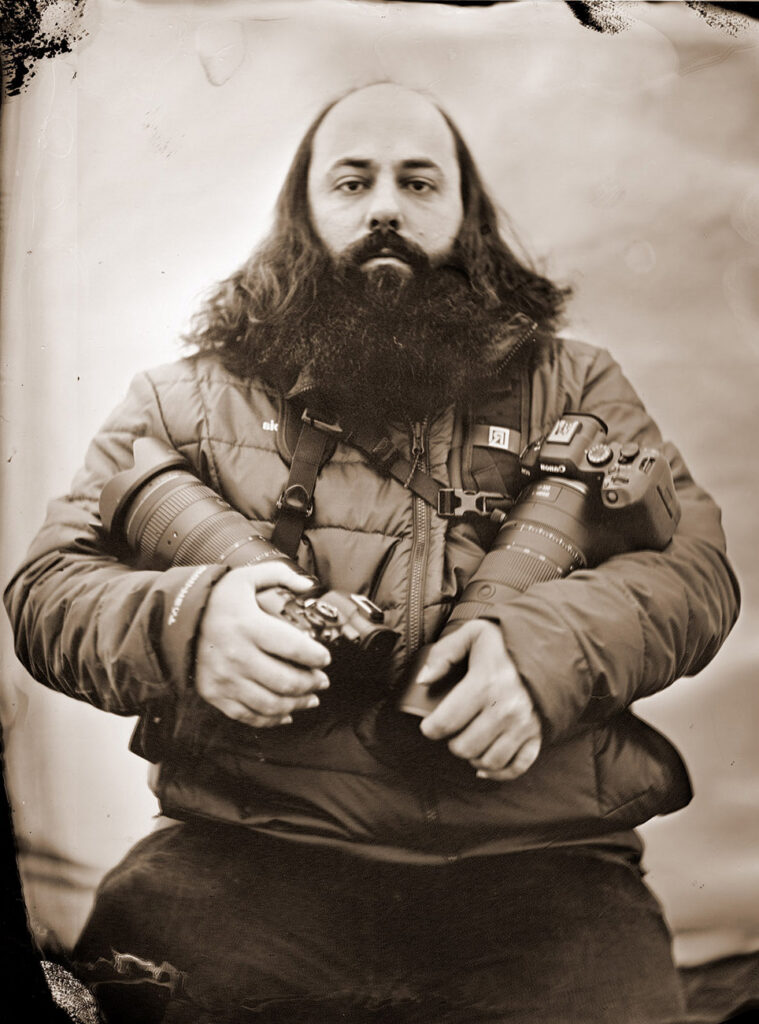
Right now, I’m paying the bills with two Canon EOS R6 Mark II bodies paired with an RF 24-105mm F2.8 L IS USM Z, an RF 70-200mm F2.8 L IS USM Z, all kept close at hand with a BLACKRAPID Double Breathe Camera Harness.
For film, I carry a Canon Autoboy 2 (AF35M II) and a Canon EOS 3, usually fitted with an EF 50mm f/1.2L USM and loaded with a rotating mix of Kodak Ektar 100, Ilford Delta 3200, and hand-rolled Kodak Vision3 250D and 500T motion picture film.
In my Pelican case lives a Mamiya RB67 fitted with a Lo-Fi and DIY instant film back, along with Mamiya-Sekor C 50mm, 150mm SF, 180mm, and 360mm lenses. I also keep an assortment of Polaroid film, Fujifilm Velvia, Fujifilm Pro 400H, and hand-rolled Kodak Vision3 250D and 500T respooled for 120 format.
Follow Ray Kuglar
- Instagram – instagram.com/raykuglar
- Website – raykuglar.com
 BLACKRAPID Spotlight: Russ Ellis


Leave a Reply